Few decisions in a new kitchen generate as much debate as the range.
Induction has become one of the most talked-about options in high-end kitchens. It's fast, precise, easy to clean, and safer around children. But is it the right choice for every luxury kitchen?
Our friends at Yale Appliance—one of New England's leading appliance retailers and a valued REEF partner—recently tackled that question in an article by CEO Steve Sheinkopf: 5 Reasons Not to Buy Induction for Your Luxury Kitchen. It's well worth a read.
Below, we summarize Yale's key points and add the perspective of a design-build team—because choosing a range isn't just an appliance decision. In Massachusetts, it can affect your home's energy code compliance, along with your electrical service, fuel supply, ventilation, cabinetry, and even your generator.
Yale's Take: Why Induction Isn't Always the Upgrade It Seems
Yale's article is not anti-induction. It acknowledges the technology's real advantages and notes that Yale sells a lot of it. Their point is that in a luxury kitchen, induction can limit your options—and that you should choose based on how you cook, not on what's newest.
Here are the five considerations Yale highlights, in brief:
- Electrical requirements. Induction ranges need substantial dedicated power—Yale notes that a typical induction range requires a 50-amp, 240-volt circuit, and some large professional models require considerably more. Many homes need new wiring or a panel upgrade, and induction won't work during a power outage.
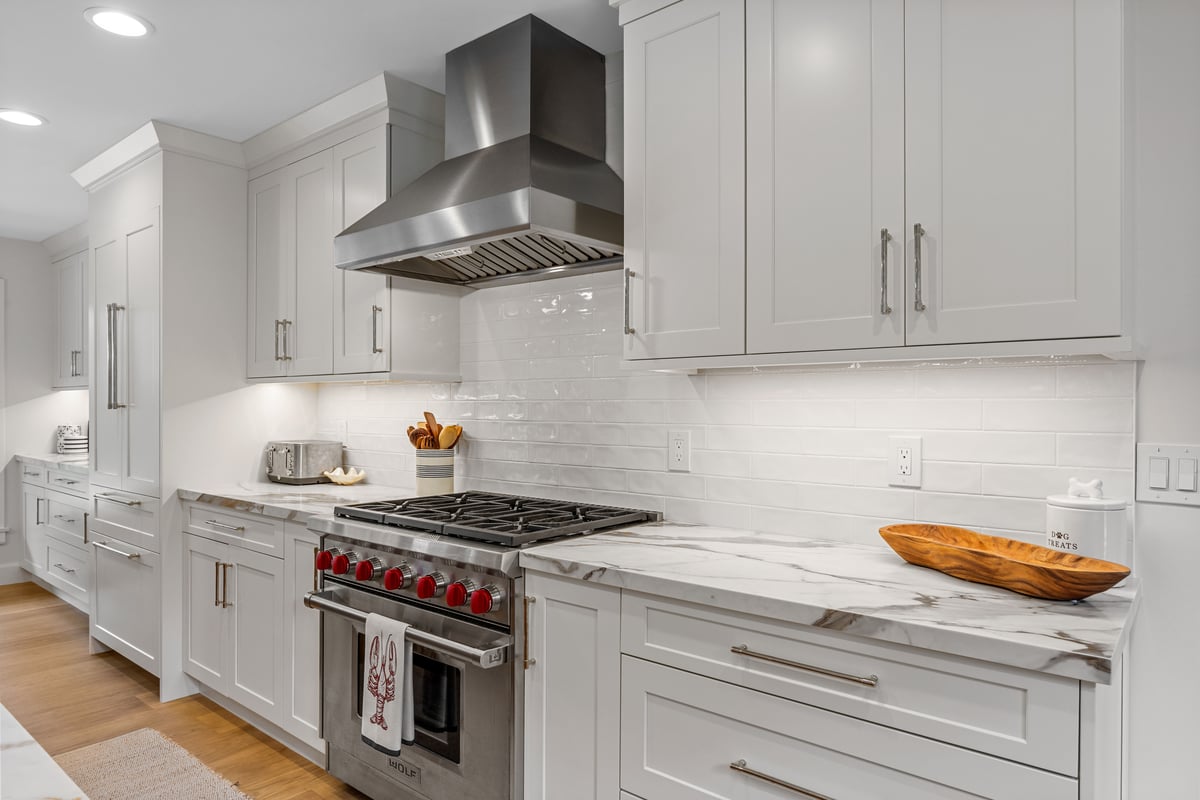
- Oven heat. Induction and dual-fuel ranges use electric ovens, which Yale considers excellent for baking. Yale's view is that gas ovens can produce better roasts, and that the infrared broilers on many professional gas ranges deliver restaurant-style searing.
- Cooktop configuration. Larger professional gas and dual-fuel ranges can include grills, griddles, and French tops. Induction can approximate some of these, but not all.
- Oven configuration. Some large dual-fuel ranges are available with steam ovens or speed ovens built in—options that large induction ranges typically don't offer.
- Service and repair. Based on Yale's own service data, induction products have had somewhat higher first-year service rates than gas in the mass-market brands it tracks, and fewer technicians are trained to repair them.
Yale's bottom line: induction is a great fit if you mostly cook on the cooktop and your home has the electrical capacity. If you roast and broil often, want a built-in grill or griddle, or want a steam or speed oven in your range, gas or dual fuel may serve you better. For the full details, read Yale's complete article.
A Builder's Perspective: What the Range Decision Affects
From where we stand, the most important takeaway is this: your range should be selected early in the design process, because it shapes several other parts of the home. As we discussed in Part 4 of our From Vision to Home series, a major appliance is rarely just an appliance.
1. Massachusetts energy codes may make the decision for you
This is the factor many homeowners don't expect—and on Cape Cod, it now applies in every town.
Massachusetts towns can adopt one of two voluntary energy codes that go beyond the state's base code: the Stretch Energy Code or the stricter Specialized Municipal Opt-in Code. Today, all 15 Cape Cod towns have adopted one or the other:
- Specialized Opt-in Code: Eastham, Truro, and Wellfleet
- Stretch Energy Code: Barnstable (effective July 2026), Bourne, Brewster, Chatham, Dennis, Falmouth, Harwich, Mashpee, Orleans, Provincetown, Sandwich, and Yarmouth
On the Islands, Aquinnah and West Tisbury have adopted the Specialized Code, while Nantucket, Chilmark, Edgartown, Oak Bluffs, and Tisbury follow the Stretch Code.
Under both codes, a home with any gas or propane appliance—including a range or cooktop—is treated as a "mixed-fuel" home, and mixed-fuel homes face tougher requirements than all-electric homes.
- In Stretch Code towns, a new mixed-fuel home must achieve a lower (better) HERS energy rating than an all-electric home—a HERS 42 versus a HERS 45 under current requirements. Meeting the stricter target with a gas range can mean added insulation, higher-performance windows, upgraded mechanical systems, or other measures that increase cost.
- In Specialized Code towns, mixed-fuel homes must meet that same stricter rating and be pre-wired for future electrification and include on-site solar where the roof allows. And for larger homes—4,000 square feet or more—the mixed-fuel path isn't available at all. Those homes must be all-electric or built to a zero-energy standard.
The practical result: in Stretch Code and Specialized Code towns, an induction range is often required to meet the energy ratings—or at least is the most practical and cost-effective way to do so. For many of the larger, high-end homes we build, choosing gas for a single appliance can change the compliance path for the entire house.
Code adoption continues to change, and the requirements apply differently to renovations and additions. That's why we confirm the current local code for every project early in design—before appliance selections are finalized and before the home's energy strategy is set.
2. Electrical service and panel capacity
If you're leaning toward induction, the home's electrical service needs to be planned for it. In a new home, sizing the service and panel to support an induction range—along with heat pumps, EV chargers, and other electric loads—is straightforward when it's done during design.
In a renovation, it can be a different story. An older Cape Cod home may need a service upgrade, a new panel, or new wiring to support induction. Identifying that early allows it to be priced and coordinated rather than discovered after the appliance has been ordered.
3. Fuel supply on Cape Cod
Many Cape Cod neighborhoods don't have natural gas service. Homeowners who want a gas or dual-fuel range often rely on propane, which means planning for a tank—above ground or buried—along with its location, setbacks, piping, and approvals.
Keep in mind that propane counts as a fossil fuel under the energy codes described above, so a propane range has the same effect on code compliance as natural gas.
4. Power outages and generators
Yale makes an excellent point about outages, and it's one we hear often from homeowners on the Cape and the Islands. Coastal storms can leave homes without power, sometimes for extended periods.
If you choose induction and want to cook during an outage, your standby generator needs to be sized to support it. If you choose gas or dual fuel, it's still worth considering which circuits your generator will carry. Either way, the range and the generator should be planned together.
5. Ventilation and make-up air
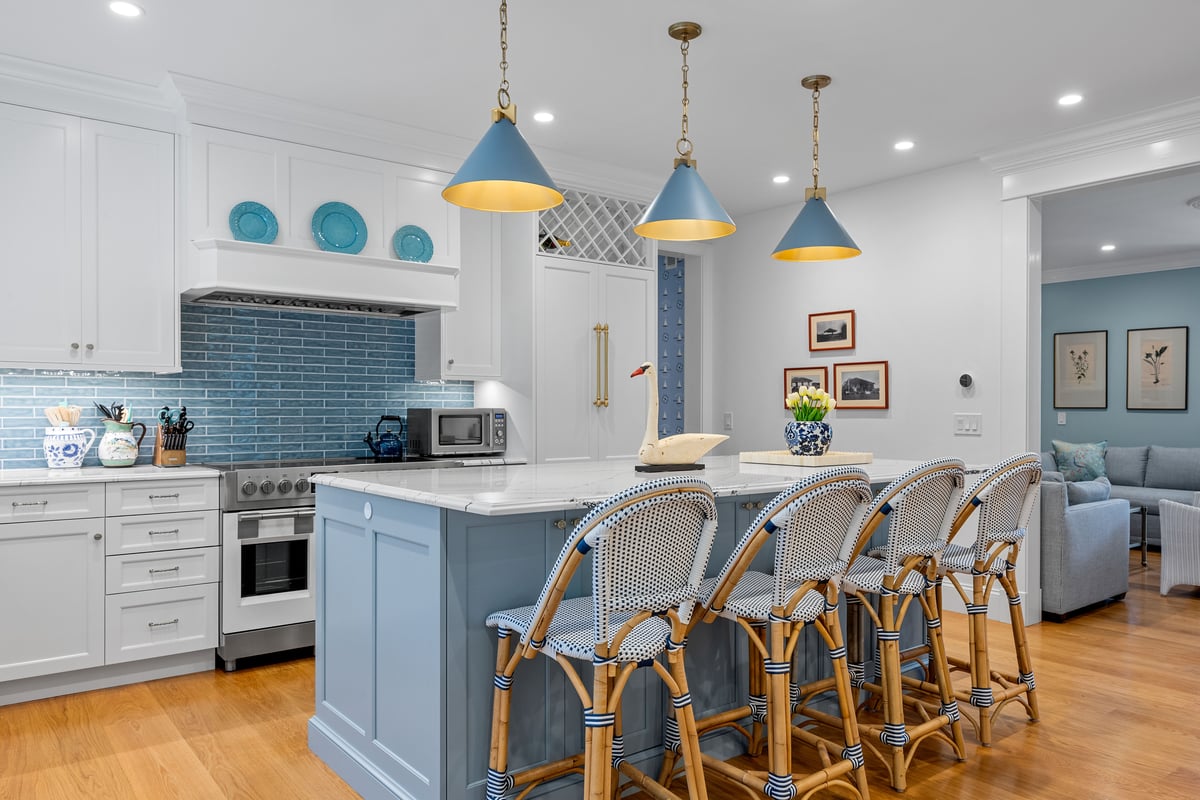
Professional gas ranges—especially those with grills, griddles, or high-output burners—produce significant heat, grease, and combustion byproducts. They need properly sized range hoods and a well-planned duct route to the exterior.
Larger, more powerful hoods may also require make-up air systems under building codes, particularly in today's tightly built, energy-efficient homes. Induction produces no combustion byproducts, but good ventilation still matters for cooking odors and moisture.
Hood size, duct routing, and make-up air all affect framing, ceiling details, and mechanical design, so they're best resolved on paper.
6. Cabinetry and kitchen layout
A 30-inch range, a 48-inch professional range, and a 60-inch range with a griddle and double ovens create very different kitchens. Range width affects cabinetry, counter space, the island, and the overall flow of the room—and professional ranges and custom hoods can have long lead times.
So Which Is Right for You?
There's no single right answer—only the right answer for the way you cook and live, the home you're building, and the town you're building in.
- Induction may be ideal if you cook mostly on the cooktop, value speed and easy cleanup, or have young children—and it is often the best or only practical choice under the Stretch and Specialized Codes now in place across Cape Cod, especially for a larger home. Plan for adequate electrical capacity and generator support.
- Gas or dual fuel may be the better fit if you love to roast, broil, or grill indoors; want a griddle, French top, or steam oven; or want the reassurance of cooking during an outage—provided your town's energy code and your home's size and design allow it.
Our advice: visit a showroom, see the ranges in action, and talk with experts like Yale Appliance about how you cook. Then involve your design-build team early, so your choice can be confirmed against the local energy code and coordinated with the home's electrical, fuel, ventilation, and cabinetry plans.
Planning a New Kitchen on Cape Cod?
Whether you're building a new home or renovating the kitchen in a longtime family property, REEF can help you make appliance decisions that work with the rest of your home and with local energy code requirements—and coordinate them from design through installation.
Thinking about building or renovating? Let's start with a conversation.
Visit CapeCodBuilder.com or call (508) 394-3090.
Download the Cape Cod Construction Cost Guide →
Original article: "5 Reasons Not to Buy Induction for Your Luxury Kitchen" by Steve Sheinkopf, Yale Appliance. Summarized with credit to Yale Appliance. Energy code adoption is based on the Massachusetts Department of Energy Resources' municipal adoption list (mass.gov) as of fall 2026; confirm current requirements with your local building department or design-build team.